Tube Handling

Vacuum tubes are the soul of tube amplifiers, determining tonality, power output and stability. For beginners learning the basics, hobbyists upgrading through tube rolling, or veteran audiophiles engaged in DIY tuning and maintenance, correct tube matching, proper setup skills and regular care help maximize your tube amp’s performance.

Core Advantages of Vacuum Tubes

Vacuum tubes handle voltage amplification, power amplification, rectification and regulation in tube amplifiers. They deliver the amps’ distinctive warm, relaxed, fatigue-free tone and serve as hallmark parts for vintage audio and high-end Hi-Fi.

Unique tonal characteristics

Natural warm harmonic richness offsets the coldness of digital audio, delivering outstanding vocal immersion.

High playability

Tone can be fine-tuned via tube rolling, modification and matching. Sound signature varies for every enthusiast, offering immense DIY potential.

Vintage aesthetic appeal

Glowing vacuum tubes combine acoustic performance with mechanical beauty and collectible value.

🛠 Rigorous Testing

Curated Vacuum Tubes

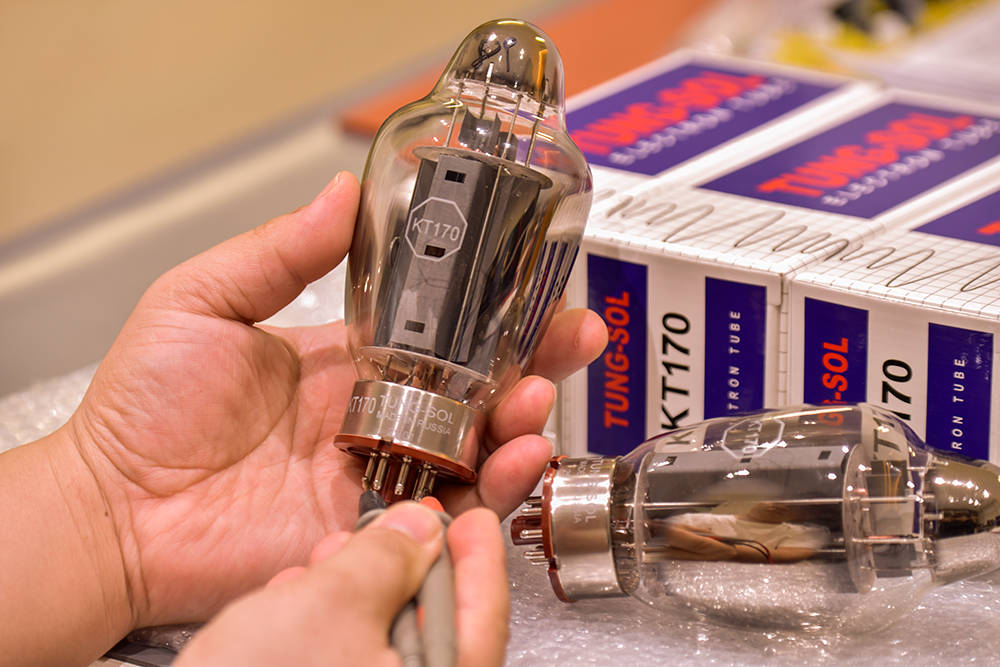
We select premium vacuum tube components. All vacuum tubes undergo rigorous testing. We measure core parameters including filament stability, transconductance and internal resistance, conduct long-duration burn-in tests, simulate static and dynamic operating conditions, and carry out channel matching screening. Tubes with excessive noise, parameter dispersion or poor operating characteristics are eliminated. Precision matching ensures channel balance for push-pull circuits and suppresses crossover distortion. Reliable vacuum tubes deliver rich, fatigue-free tone while lowering failure risks, laying a solid foundation for long-term stable operation of the amplifier.

🔥 High Playability

Tube Rolling

Enthusiasts can tune the tone of tube amplifiers by swapping different vacuum tubes according to personal listening preferences. Normally, tube replacement should be completed by professional technicians. You may also learn relevant knowledge and safety precautions to perform the operation on your own, making tube rolling an enjoyable hobby. There are various vintage vacuum tubes on the market celebrated for their legendary sonic characteristics, alongside newly released high-performance tubes. Nevertheless, not all tubes are compatible with every amplifier model.

Core Principles for Tube Rolling

  1. Pin Configuration Compatibility
    Different tube models feature distinct pin layouts. Incorrect insertion is strictly prohibited to avoid burning out tubes and the amplifier.
  2. Electrical Parameter Matching
    Filament voltage and plate voltage must fall within the supported range of the amplifier. Confirm circuit compatibility before any non-standard direct replacement.
  3. Matched Tubes for Push-Pull Amplifiers
    Output power tubes of push-pull amplifiers require precise matching. Single-ended amplifiers offer greater flexibility for tube swapping with higher fault tolerance.

Bias Adjustment

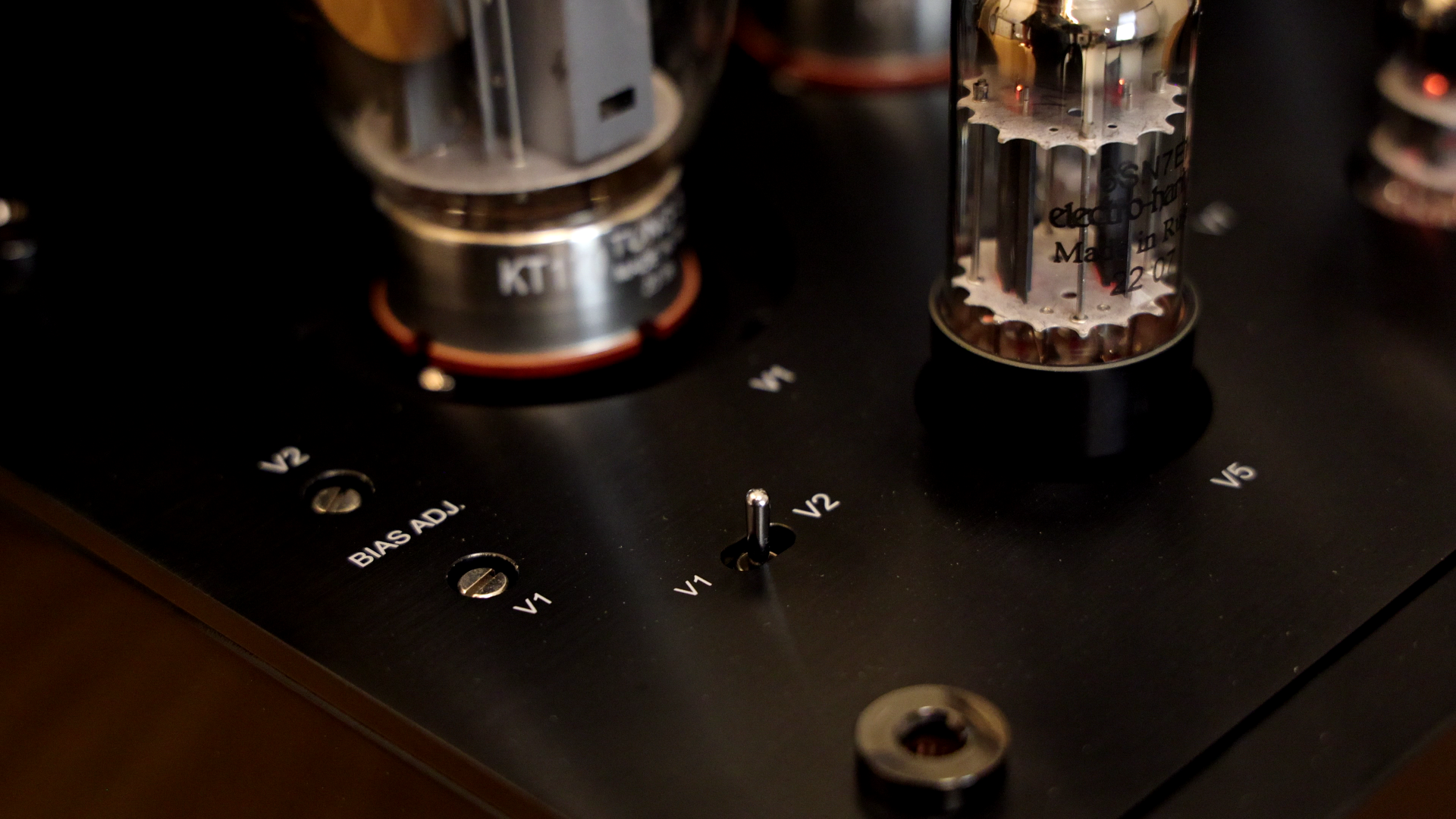
Proper bias adjustment enables all power tubes to operate at their optimal working point, which directly affects the sonic performance and service life of vacuum tubes.Line Magnetic tube amplifiers feature bias control knobs on the front panel. Users can monitor the operating status of power tubes via the meter and perform adjustments as required following the instructions.

Adjustment Procedures

  1. Toggle the selector switch to choose the vacuum tube to be adjusted (marked V1, V2, V3, V4). Hold the switch in position during adjustment.
  2. Slowly turn the adjustment knob with a suitable screwdriver.
  3. Watch the bias meter while adjusting. Stop turning once the pointer reaches the optimal position.

Two Common Mistakes During Bias Adjustment

  1. The amplifier requires sufficient warm-up. Bias readings are unstable during startup and warm-up. Carry out accurate adjustment only after the unit reaches stable operating conditions.
  2. Turn the knob gently with the screwdriver. Do not apply excessive force when rotating clockwise or counterclockwise, otherwise damage may occur.

Vacuum Tube Core Functions & Replacement

Replacing vacuum tubes offers plenty of enjoyment, yet safety precautions are essential. Tube replacement should be carried out by professionals or under professional supervision.
Do not perform any unauthorized operation to avoid accidents such as short circuits and equipment burnout. The following list is for reference only.

Core Function
Classic Common Models
Interchangeable Models
Preamplifier Voltage Amplifier Tube (Small-Signal Tube)
First-stage / multi-stage small-signal voltage amplification for audio signals; determines the basic resolution, sound field, detail and fundamental tone color of tube amplifiers, acting as the "cornerstone" of preamp timbre
12AX7, 12AU7, 12AT7, 12AY7, 6SN7GT, 6SL7GT,
6922/ECC88, 6CG7/6FQ7, 5751, 5687
12AX7=ECC83/CV4004/7025/B339/E83CC/ECC803S/M8137/6Н2П
12AU7=ECC82/CV4003/5814/6189/E82CC/ECC802S/M8136/6Н12П
12AT7=ECC81/CV4024/6201/E81CC/B309/ECC801S/6Н3П
6SN7GT=5692/CV181/B65/33S30/CV1988/6Н8С/6N8P
6SL7GT=5691/CV1985/ECC35/B76/6Н9С/6N9P
6922/ECC88=6DJ8/E88CC/7308/6922/CV2492/6Н11П/6N11
6CG7/6FQ7=6SN7(Socket Adapted)/CV8233/ECC20
5751=12AX7WA/ECC83M/CV4004
5687=E182CC/7044/CV8247/6Н6П/6N6
Driver Tube
Serves as the signal bridge between preamplifier and output power tubes; amplifies pre-stage small signals to sufficient amplitude, supplements output current to drive output tubes to operate at full power; determines the dynamics and control capability of the output stage
12BH7, 6V6GT, 6AQ5, 6N6, 6L6GC, EL84,
6N5P, 6AS7G, 6080, ECC99, 6N13P
12BH7=ECC99/12BH7A/CV5042/6Н6П/6N6
6V6GT=6V6GTA/6V6G/6AQ5/CV511/6П6П/6P6P
6AQ5=6V6GT/6P1/6П1П
6N6=12BH7/5687/E182CC/6Н6П
6L6GC=KT66/5881/6L6WGB/CV1948/6П3С/6P3P
EL84=6BQ5/7189/CV2975/6П14П/6P14
6N5P=6080/6AS7G/CV2523
ECC99=12BH7/6N6/CV5042
6N13P=6N5P/6080/6AS7G
Output Power Amplifier Tube - Directly-Heated Triode
Final power amplification of audio signals, outputs large current to drive speakers; the core of tube amp power output. Single-ended circuit versions boast outstanding tonal performance and are the benchmark tubes for Hi-Fi tube amplifiers
300B, 2A3, 45, 845, 211, 805, 101D, PX4,
PX25, 211E, 6V6GT, 6C5P, EC92
300B=WE300B/300B-98/KR300B/300BXLS/4300B
2A3=2A3B/2A3C/421A/2A3-40
45=45A/UX245/CV1771
845=845B/845C/845M
211=211A/211M/VT4C
805=805A/805M
101D=101DA/UX210/CV1745
PX4=PX4A/RE604/CV1154
PX25=PX25A/PX4/CV1198
211E=211A/845B
6V6GT=6V6GTA/6P6P/6П6П
6C5P=6C5GT/6J5/CV1932
EC92=6C4/CV133/6С4П
Output Power Amplifier Tube - Beam Tetrode / Pentode
Mainstream power amplifier tubes for tube amps; enables high power output in push-pull circuits while retaining classic tube timbre and dynamic control; highly adaptable, covering applications from household to stage scenarios
EL34, KT88, 6L6GC, T66, KT120, KT150, 5881,
6P3P, EL84, EL86, 6P1, 6P14, 6P6P, 6F6
EL34=6CA7/KT77/7027A/CV1741/6П27П
KT88=6550/6550A/KT90/6П55С
6L6GC=KT66/5881/6L6WGB/CV1948/6П3С/6P3P
KT66=6L6GC/5881/CV1075/6П3С
KT120=KT150/KT88/6550A
KT150=KT120/KT170/6550B
5881=6L6GC/KT66/6L6WGB
6P3P=6L6GC/KT66/6П3С
EL84=6BQ5/7189/7189A/CV2975/6П14П/6P14
EL86=EL84/6BQ5/6P14
6P1=6AQ5/6V6/6П1П
6P14=EL84/6BQ5/6П14П
6P6P=6V6GT/6П6П
6F6=6F6GT/CV1912/6П6С
Rectifier Tube
Converts alternating current into pure direct current to supply stable high-voltage power for the whole machine; known as the "energy heart" of tube amplifiers, directly affects background noise floor, transient response and tonal relaxation
5AR4/GZ34, 5U4G, 5Y3GT, 274B, 5Z3P,
5Z4P, 83, 6Z4, 6X4, EZ80, 6Z5P
5AR4/GZ34= GZ34/CV378/GZ33/5AR4A/5Z4P
5U4G= 274B/5R4GY/U52/CV575/5Z3P
5Y3GT= 5Y3G/80/5W4/CV1856/5Z2P
274B= 5U4G/5R4G/U52/5Z3P
5Z3P= 5U4G/274B/5R4G
5Z4P= 5AR4/GZ34/CV378
83= 83V/CV1126
6Z4= 6X4/EZ90/6BX4/CV493
6X4= 6Z4/EZ90/CV493
EZ80= 6V4/CV4006
6Z5P= EZ80/6V4/CV4006